
The Complete Guide to WhatsApp Drip Campaigns That Actually Convert
Your leads go cold within minutes — and your competitor is already ahead. Here's how to build WhatsApp drip campaigns that actually convert.
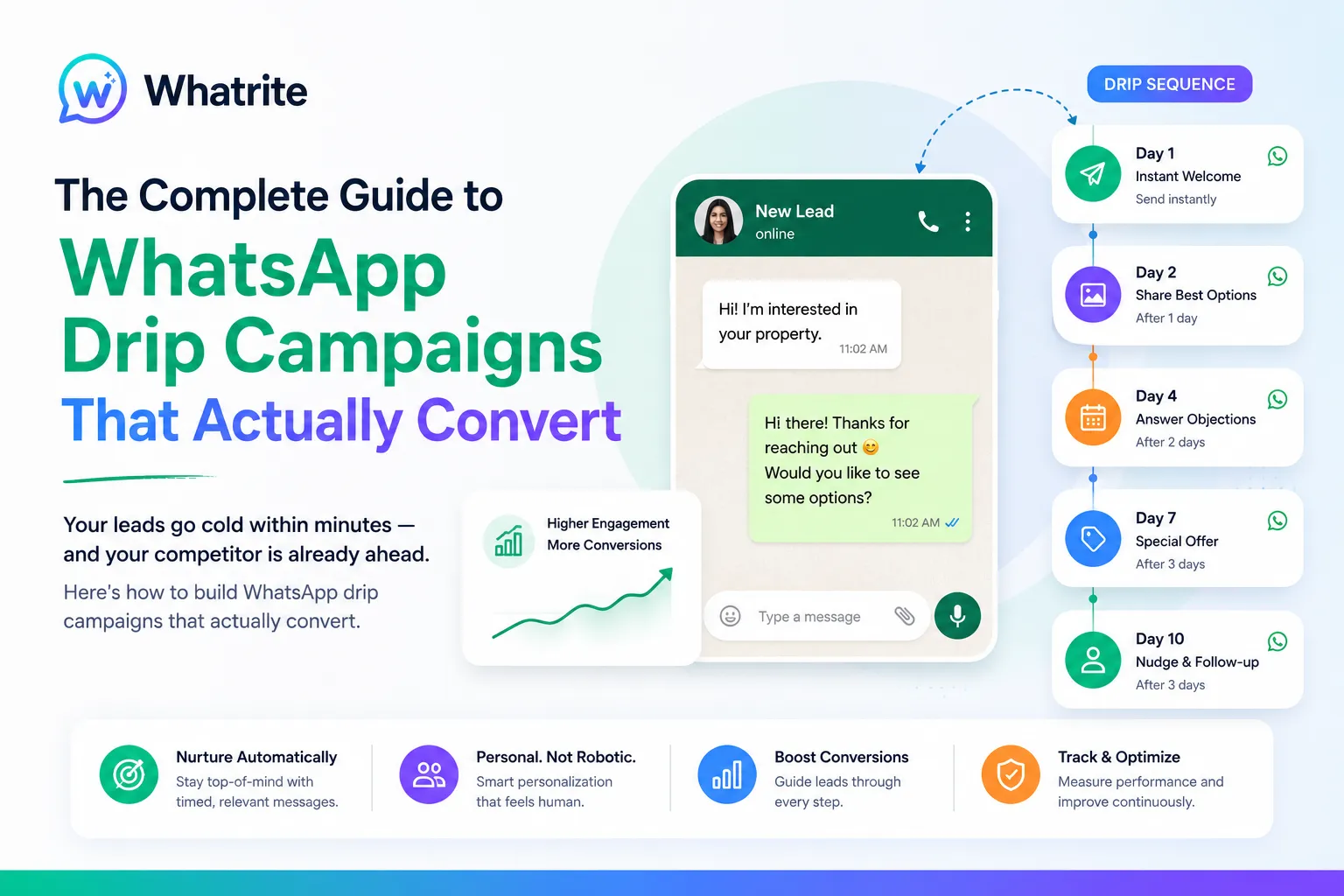
Your leads are slipping through the cracks. They filled out a form, showed interest, and now they are sitting in silence while your competitor sends them a WhatsApp message within minutes. A WhatsApp drip campaign fixes that gap by automating follow-ups that feel personal, land in the right channel, and keep your business top of mind without you lifting a finger after setup.
What Is a WhatsApp Drip Campaign and Why Should You Care
A WhatsApp drip campaign is a series of automated messages sent to contacts over a set time window. Unlike one-off broadcast blasts, drip sequences are triggered by specific actions, such as a user subscribing to your list, abandoning a cart, or going quiet after an initial reply. The goal is to deliver the right message at the right moment in the customer nurture sequence without manual intervention.
The channel matters because WhatsApp has an open rate north of 98 percent in India. Your emails are ignored. Your calls go to voicemail. Your WhatsApp messages get read within minutes. When you combine that reach with message automation, you have a nurture system that works while you sleep.
Before You Start: The Compliance Basics You Cannot Skip
WhatsApp has strict rules about how businesses can message people on its platform. Meta, the parent company, requires businesses to obtain explicit consent before adding contacts to any automated sequence. You also need to respect the 24-hour rule, which limits outbound messages to responses within a day of a customer's last reply.
Additionally, there are rate limits to consider. WhatsApp caps the number of messages you can send per day based on your verified business account tier. If you exceed those limits, your account can be temporarily blocked. Whatrite handles these guardrails automatically by queuing messages and pacing sends to keep your account in good standing.
Before you write a single message, make sure you have these three things in place:
- Opt-in verification for every contact on your list
- A clear unsubscribe path in every message
- A documented plan for handling complaints and blocking requests
Building Your Drip Sequence: The Four-Stage Framework
Stage One: The Hook
The first message lands within minutes of a trigger, such as a new lead capture or a missed call. This message should acknowledge the action they took, deliver immediate value, and set expectations for what comes next. Keep it short. Ask a single question that moves the conversation forward.
A real estate consultant might send: "Hi Rahul, thanks for inquiring about Brigade Centennial. I have two 3BHK units available on the 8th floor with park views. Which layout works better for your family?"
Stage Two: The Value Add
Between 24 and 48 hours later, send content that educates or entertains without selling. Share a relevant blog post, a short video tour, or a case study from a similar buyer. This builds trust and keeps your number saved in their phone. The goal here is to stay visible without being pushy.
Stage Three: The Soft Ask
Three to five days in, it is time to gently prompt the next action. Ask if they have questions. Offer to schedule a call. Share a limited-time incentive if appropriate. This is where most businesses push too hard too fast. Resist the urge to send a discount code as your third message.
Stage Four: The Re-engagement
If there is no response after the third message, a re-engagement note can work, but it must offer something genuinely different. A new angle, a different property type, or an exclusive update. If they still do not engage after this, pause further automated outreach and let them come back on their own terms.
Writing Messages That Convert: Practical Tips
The best WhatsApp marketing messages read like texts from a helpful colleague, not marketing copy from a brand account. Here is what that looks like in practice.
Use the contact's name in the first message only. After that, it feels scripted. Write as if you are replying to a question they asked, even if they did not ask it yet. Anticipate objections and address them before they voice them.
Personalize the sequence based on where the lead came from. A contact from a 99acres listing inquiry has different needs than someone who signed up through your Instagram link. Tailor your hook message and follow-up content to reflect their entry point.
Add media sparingly. A short property walkthrough video or a floor plan image can dramatically increase responses, but sending image after image clutters the chat. Choose your moments.
Measuring Success: The Metrics That Actually Matter
vanity metrics like message open rates are not useful because WhatsApp does not track opens the way email does. Instead, focus on these three numbers.
- Response rate: the percentage of messages that receive a reply
- Conversion rate: the percentage of contacts that take the desired next step
- Unsubscribe rate: how many people opt out of the sequence
A healthy WhatsApp drip campaign should see a response rate above 15 percent on individual messages and a conversion rate between 3 and 8 percent depending on your industry and offer. If your unsubscribe rate climbs above 2 percent, revisit your consent process and message tone.
How Whatrite Makes This Easier
Setting up drip sequences manually means managing templates, timing rules, and contact lists across multiple tabs. Whatrite gives you a visual builder where you can map out your entire customer nurture sequence, set time delays between messages, and trigger sequences based on specific actions like form submissions or missed calls.
The platform connects directly to Meta's WhatsApp API, so your messages go through the official Business solution rather than a workaround that risks your account status. Whatrite also handles opt-in tracking, rate limit pacing, and delivery receipts so you can focus on writing messages that convert instead of managing infrastructure.
The Bottom Line
A WhatsApp drip campaign is not a set-it-and-forget-it tool. It requires thoughtful setup, honest compliance practices, and messages written for humans, not inboxes. Get those right and you have a nurture system that responds to leads within minutes, keeps them engaged over days, and guides them toward a decision without your team burning out on manual follow-ups. The channel is there. The tools exist. The only question is whether you are using them yet.